


Free shipping on orders over €75 to mainland Portugal.

🚚 Fast 24-hour/48-hour deliveries nationwide

Favoritos
Sem categoria

OVERLOAD VS. ADAPTATION: THE MISTAKE THAT ALMOST EVERYONE MAKES

Our bodies have incredible capabilities! When we start training and seeing progress, the feeling can be addictive. It’s easy to develop a desire to push ourselves further and further. We discover strengths we never knew we had. This can be positive, if we understand our body’s limits. These limits deserve to be listened to and respected, even before they cry out for help.

Think of a rubber band. To gain elasticity, it must be stretched, but gradually. If you do it suddenly, or without stopping, it will eventually snap. The same thing happens with our muscles. They need tension to evolve, but they also need to return to their initial state to adapt and become more resistant.

  • Are you training for the first time?
  • Or, if you already train, do you want to understand your limits and avoid overexertion?

Stay here to find out more about this!

drartus.com LinkedIn 1, Ortóteses Desportivas DRARTUS

Risk sign 1: The pain becomes incapacitating

Pain after training can be a normal consequence, within certain limits. But it starts to be a warning sign when the way it manifests itself begins to change. For example, when it appears earlier and earlier, right at the warm-up. Or when it no longer disappears within 48 hours and drags on for days. Or even when movement itself no longer relieves the pain and begins to aggravate the sensation.

This pattern is not usually muscular, but rather, almost always, structures that cope poorly with continuous load (tendons, insertion zones, or joints subject to accumulated stress). When pain begins to limit training, it is no longer adaptation, but a sign of risk.

Risk sign 2: Recovery is painful and time-consuming

This can be a factor that is sometimes overlooked. The training does not change, but the feeling of recovery is different. Upon waking up, the person feels exhausted, even after a good night’s sleep, workouts that were previously light begin to feel heavy, and stiffness becomes constant, especially in the morning.

This isn’t a bad day, it’s accumulated fatigue. When recovery fails to keep up with the workload, the body goes into deficit, which limits progress. There is forced adaptation, compensations, and later on, problems arise.

Risk sign 3: Performance declines

It is a subtle sign that can easily be mistaken for distraction or lack of focus. You begin to notice less stability in simple exercises, your coordination is not the same, and one side starts to work harder to compensate for the other.

Insisting on intensity at this stage is a common mistake among those who train. Sustainable performance does not depend solely on strength or endurance. It depends on control, especially when fatigue sets in.

drartus.com LinkedIn 3, Ortóteses Desportivas DRARTUS

What should I do in practice?

It is extremely important to manage the load according to physiological aspects such as stress, sleep, diet, and injury history.

With regard to load progression, this may not be linear, as it is advisable for it to be adaptable. There will be weeks of progress and weeks of consolidation. After increasing the load, you should have a period of stabilization until your muscles adapt again.

What about the role of support and prevention?

In regular training contexts, prevention materials are recommended. This support helps reduce stress on the joint and allows you to train more safely and effectively. Having this support does not mean that warning signs are less relevant if they appear. The body still has limits, even when protected. Sometimes it is best to stop physical activity completely for the period recommended by healthcare professionals.

Being informed is the best way to prevent minor accidents from having major consequences. Your safety is our priority.

Drartus

Questions that make a difference

Can I exercise with pain if it doesn't get worse?

It depends on the type of pain. Stable, muscular, and predictable pain may be acceptable, but progressive pain is not.

Is active rest always the solution?

Active rest does not always work. When there is overload, active rest can delay recovery.

Will taking a few days off cause me to lose my fitness level?

No, in some cases, it is better to stop than to cause more damage.

Related articles:

dor joelho ciclismo Face, Ortóteses Desportivas DRARTUS

Knee pain and adjustments in cycling

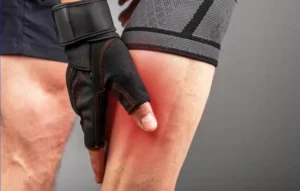
Many people with knee pain tolerate cycling better than running, as it is supposedly a lower-impact activity. With the load well distributed and practiced correctly, this sport can help strengthen the thigh and improve the knee’s tolerance to exertion. But then, why is it that in some cases this discomfort is still related to this practice? These and other questions will be answered in this article.
Read More »
facebook drartus.com 1, Ortóteses Desportivas DRARTUS

Sore shins?

It may seem like a minor issue until it starts to limit your ability to perform more strenuous activities. Have you ever experienced pain in your shins? Perhaps this discomfort occurred on the front or inner side of your tibia. This complaint is often associated with people who run, jump, or rapidly increase their training load. The diagnosis may be medial tibial stress syndrome, better known as shin splints.

Read More »

Join the conversation

TOP
Os mais vendidos:
Carrinho 0
RECENTLY VIEWED 0

Select a Pickup Point