
Heel pain in the morning? It could be plantar fasciitis.
Plantar fasciitis is a discomfort described as a feeling of pins and needles in the heel. The pain occurs immediately upon waking up, then may ease throughout the day, but returns later. This pattern is typical of plantar fasciitis, a condition that is treatable in most cases.
During the night, the plantar fascia (the fibrous structure connecting the heel to the toes) remains shortened, and when standing up, it is suddenly placed under load, causing sharp pain when walking.
Contrary to what many people think, this is not a serious inflammation. In most cases, the problem lies in repeated overload and the tissue’s loss of ability to cope with daily impact.
Why does plantar fasciitis occur?
It may be the result of the following cumulative factors:
- Sudden increase in walking, running, or standing time;
- Footwear without adequate support;
- Stiffness in the sole of the foot or Achilles tendon;
- Weakness of the foot and leg muscles;
- Excessive impact without sufficient recovery time.
Should I see a doctor?
In most cases, it is not necessary to see a doctor immediately. as soon as the pain appears. Plantar fasciitis almost always begins in connection with overload, footwear, activity volume, or lack of recovery. In the early stages, simple and well-guided adjustments usually resolve the problem; however, many people end up stopping walking and the pain progresses.
When does it make sense to wait and see?
If the pain:
- It appeared recently;
- Improves throughout the day;
- Does not significantly limit walking;
- It doesn’t get worse from week to week.
Even so, it may be important to alleviate the condition through certain measures, such as reducing impact, reviewing footwear, introducing simple exercises, and better managing daily workload.
When to see a doctor is important
There are signs that call for more help, in addition to our own observation (medical observation):
- Severe pain that does not improve after 2–3 weeks;
- Pain that progressively worsens;
- Pain even at rest or during the night;
- Clear difficulty walking;
- History of trauma;
- Suspicion of other causes (stress fracture, nerve compression, inflammatory diseases).
What about physical therapy?
This may be the most useful measure., even without first consulting a doctor. Physical therapy addresses the mechanical cause of the problem: load, mobility, strength, and control of the foot and leg.
Stretch
Stretching the sole of the foot and Achilles tendon reduces immediate tension and relieves symptoms, but it is also necessary to perform progressive and constant strengthening exercises.
Stretching suggestions:
Stretches that usually help with plantar fasciitis
- Before putting your feet on the floor (in the morning): Do 2–3 minutes of mobility/stretching while still seated. The pain usually subsides after the first few steps.
- Throughout the day: 2–3 times, especially if you spend a lot of time sitting and then stand up.
After walking/running or a day spent on your feet: stretch at the end, without forcing it.
Stretching the plantar fascia (sole of the foot)
- Sit down and place your foot on top of the opposite knee.
- Grasp your toes and pull them toward you until you feel tension in the sole of your foot, closer to your heel.
- Hold for 20–30 seconds, relax, and repeat 3–5 times per foot.
- Reference point: “pulled” tension, not a sharp pain in the heel.
Calf stretch (leg stretched out, against the wall)
- Hands on the wall, back leg straight, and heel firmly planted.
- Lean your body forward until you feel tension in the back of your leg.
Hold for 30–45 seconds, repeat 2–3 times on each side.
Hamstring stretch (knee bent, against the wall)
- Same as above, but with the back knee bent, heel always on the floor.
- Look for “lower” tension, near the Achilles tendon.
Hold for 30–45 seconds, repeat 2–3 times on each side.
Stretching on the stairs (Achilles tendon/calves)
- Place the front of your foot on the step and lower your heel until you feel tension.
- Hold for 20–30 seconds, repeat 3 times.
- If you experience acute pain in your heel, switch to stretching against the wall.
Do insoles help?
Insoles work in many cases, when properly prescribed, but they are not a cure. They help reduce stress on the irritated area, allowing the tissue to recover, just as footwear can help, but foot re-education and load control are necessary.
How long does recovery take?
It depends on where you are in the process. Protracted situations can take months, but if it’s something in the early stages, the time can be reduced to weeks.
Your safety is our priority.
Related frequently asked questions:
What are the best devices for relieving plantar fasciitis pain?
Arch support insoles, silicone heel cups for shock absorption, and shoes with good stability and cushioning are useful for reducing stress on the tissue, especially in the early stages, but they work best when combined with exercise and adjustments to daily activities.
Can plantar fasciitis come back after it gets better?
Yes, if the pain disappears but the load, footwear, or movement patterns are not adjusted, relapse is common. Improvement in symptoms does not mean that the tissue is fully prepared to return to the same pace.
Does walking barefoot worsen plantar fasciitis?
It can worsen, especially on hard surfaces, due to the lack of cushioning and support in the heel. In more advanced stages of recovery, it can be reintroduced in a controlled manner.
Does plantar fasciitis only affect runners?
No, it affects people who spend many hours on their feet, walk long distances, or wear inappropriate footwear.
Should ice be used whenever it hurts?
It is most useful in the early stages or after periods of increased load. It helps relieve symptoms, but does not replace strengthening and load management.

Europe Marathon 2026: information and post-race details
The 2026 European Marathon will take place in Aveiro on the weekend of April 25 and 26. On Saturday, April 25, the Mini-Marathon (10 km) will start at 8:00 a.m. On Sunday, April 26, the Marathon, Half Marathon, and Walk will start at 8:00 a.m.

Knee pain and adjustments in cycling
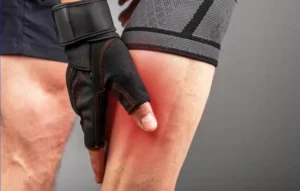
Many people with knee pain tolerate cycling better than running, as it is supposedly a lower-impact activity. With the load well distributed and practiced correctly, this sport can help strengthen the thigh and improve the knee’s tolerance to exertion. But then, why is it that in some cases this discomfort is still related to this practice? These and other questions will be answered in this article.
Sore shins?
It may seem like a minor issue until it starts to limit your ability to perform more strenuous activities. Have you ever experienced pain in your shins? Perhaps this discomfort occurred on the front or inner side of your tibia. This complaint is often associated with people who run, jump, or rapidly increase their training load. The diagnosis may be medial tibial stress syndrome, better known as shin splints.

How to recover quickly from training?
During deep sleep, growth hormone is released, protein synthesis increases, and neuromuscular reorganization occurs. It is during this period that the body repairs micro-injuries induced by training and consolidates adaptations.
Poor sleep compromises strength, endurance, coordination, and tolerance to load. No peripheral strategy can compensate for chronic sleep deprivation.
Consistency in bedtime and wake-up times, a dark and quiet environment, and sufficient rest time are crucial to the recovery process.

Heel pain in the morning? It could be plantar fasciitis.
Plantar fasciitis is a discomfort described as a feeling of pins and needles in the heel. The pain occurs immediately upon waking up, then may ease throughout the day, but returns later. This pattern is typical of plantar fasciitis, a condition that is treatable in most cases.
During the night, the plantar fascia (the fibrous structure connecting the heel to the toes) remains shortened, and when standing up, it is suddenly placed under load, causing sharp pain when walking.
Contrary to what many people think, this is not a serious inflammation. In most cases, the problem lies in repeated overload and the tissue’s loss of ability to cope with daily impact.
Measures that relieve tennis elbow
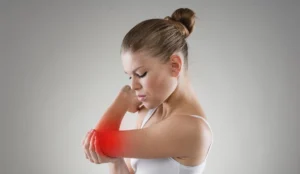
“Tennis elbow” is the name given to lateral epicondylalgia, pain on the outside of the elbow, almost always linked to overuse of the tendons that extend the wrist and fingers (very close to the bone, in the lateral epicondyle). It does not only occur in tennis players.
