
How to recover quickly from training?
Some say that the most important part of training is recovery. Its relevance lies in the following:
- Muscle growth requires a positive balance. After training, protein synthesis increases, but this only translates into hypertrophy when nutrition and rest allow this rebuilding to outweigh degradation over days and weeks.
- The nervous system also gets tired. Even when the muscle “holds up,” the ability to recruit fibers, coordinate movement, and produce force declines with accumulated fatigue, and this limits the quality of the next workout.
- Tendons and joints adapt more slowly. Muscles can improve quickly, but connective tissue takes longer, and without sufficient recovery, that annoying persistent pain appears, which is not a serious injury, but it does reduce consistency.
- Sleep is the greatest multiplier. Poor sleep affects pain, appetite, blood sugar control, motivation, and performance itself; the result is less work done well and less progress.
- Recovery determines consistency. What builds results is not the isolated training session itself, but rather being able to train week after week without fatigue forcing you to stop or reduce everything.
Rest and recovery involve managing your workload well, sleeping, eating enough, and taking lighter days when it makes sense, to build strength.
Recovery in hypertrophy
Recovery helps with hypertrophy when three conditions are met: adequate stimulation during training, sufficient protein and energy, and rest that allows you to repeat the stimulation with quality without accumulating fatigue that ruins volume and technique.
O que muda durante a recuperação, por áreas:
- Muscle repair: small micro-injuries and disturbances in the fibers and connective tissue are repaired, and the muscle strengthens structures to better withstand the same type of load.
- Glycogen: replenishes some of the fuel used, especially if the training session was intense; this influences performance in the next session.
- Nervous system: improves coordination and the ability to recruit fibers, and the feeling of “heaviness” tends to decrease as neural fatigue diminishes.
- Inflammation and delayed onset muscle soreness (DOMS): there is a normal inflammatory response to the repair process, which explains stiffness and pain 24–72 hours later, but pain is not synonymous with growth.
- Tendons and ligaments: they adapt more slowly than muscles, so recovery is more critical when you increase load or volume.
In practice, for hypertrophy, recovery is much easier to manage with these minimums:
- Sleep: 7–9 hours is usually the point where almost everyone improves their performance and recovery.
- Daily protein: a simple and effective rule of thumb is around 1.6–2.2 g/kg/day, spread throughout the day.
- Sufficient energy: if you eat too little or too much, you will not grow much, even with good training.
- Volume management: more sets is not always better when quality declines and fatigue accumulates.
Support for faster recovery
Compression stockings: circulation and perception of fatigue
Compression socks exert graduated pressure on the legs, promoting venous return and reducing fluid stagnation after prolonged exertion. In endurance sports, many athletes report feeling less heaviness and swelling when they use them after training.
The impact on muscle structural regeneration is subtle, but the added comfort can make it easier to return to the next workout with less accumulated fatigue. They can be a useful complementary support during periods of higher volume.
Fisiocrem and topical creams: localized comfort
Some types of cream act through superficial thermal stimuli. Some of them can transmit the sensation of cold or heat, which alters the perception of pain and can provide temporary relief after more intense workouts.
The effect is symptomatic. It does not accelerate muscle fiber reconstruction or significantly alter the physiological inflammatory process associated with training. For those who experience localized discomfort, it can improve well-being and facilitate mobility in the hours following exercise.
Ice: when to use it and for what purpose
Applying ice temporarily reduces pain and swelling through vasoconstriction and decreased nerve conduction. In situations of acute overload, blows, or more obvious inflammation, it can be useful in the first few hours.
In the context of regular training, systematic use after every session is not mandatory. Controlled inflammation is part of the adaptive process. Excessive intervention may not provide additional benefits. It can be used when there is marked pain or clear signs of tissue irritation.
Massage roller: mobility and reduced stiffness
Myofascial release rolling has shown consistent effects in reducing delayed onset muscle soreness and temporarily improving range of motion. By applying controlled pressure to muscle tissue, it promotes increased local blood flow and modulation of sensitivity.
It does not replace strength training or correct technical patterns, but it helps maintain mobility and reduce post-exercise stiffness. Integrated on a regular basis, it can facilitate the transition between sessions and improve the quality of movement.
Cryotherapy: extreme cold and recovery
Cryotherapy, whether through immersion in cold water or controlled cold chambers, has been associated with reduced muscle pain and perceived fatigue after intense exercise.
The effects seem to relate mainly to symptom control and short-term recovery, rather than directly accelerating muscle regeneration. In competitive contexts with tight schedules, it can be strategically useful. Outside of this scenario, the additional benefit compared to simpler methods does not always justify the complexity.
Sleep
During deep sleep, growth hormone is released, protein synthesis increases, and neuromuscular reorganization occurs. It is during this period that the body repairs micro-injuries induced by training and consolidates adaptations.
Poor sleep compromises strength, endurance, coordination, and tolerance to load. No peripheral strategy can compensate for chronic sleep deprivation.
Consistency in bedtime and wake-up times, a dark and quiet environment, and sufficient rest time are crucial to the recovery process.
Your safety is our priority.
Related Frequently Asked Questions:
How many hours should pass before training the same muscle again?
It depends on the volume and proximity to failure, but the rule of thumb is to return when you can repeat the pattern with good technique and without a clear drop in performance, because pushing yourself when you are extremely fatigued tends to lower the quality of the stimulus and increase compensations that later appear as stubborn pain.
Is it better to train with delayed muscle soreness or wait for it to go away completely?
If the pain is mild to moderate and improves with heat, training may be beneficial and may reduce pain. Some adjustments can be made to load, range of motion, and speed, because movement usually reduces stiffness. If the pain alters your mechanics, limits your range of motion, or causes you to deviate from the standard, it is worth changing your focus or lowering your requirements for that day.
Does stretching at the end of a workout really speed up recovery?
Stretching can help relieve tension and improve movement tolerance in some people, but it is not a guaranteed accelerator of regeneration. When used, it works best if it is gentle and short, without pulling to the point of pain, especially in muscles that are already irritated.

Europe Marathon 2026: information and post-race details
The 2026 European Marathon will take place in Aveiro on the weekend of April 25 and 26. On Saturday, April 25, the Mini-Marathon (10 km) will start at 8:00 a.m. On Sunday, April 26, the Marathon, Half Marathon, and Walk will start at 8:00 a.m.

Knee pain and adjustments in cycling
Many people with knee pain tolerate cycling better than running, as it is supposedly a lower-impact activity. With the load well distributed and practiced correctly, this sport can help strengthen the thigh and improve the knee’s tolerance to exertion. But then, why is it that in some cases this discomfort is still related to this practice? These and other questions will be answered in this article.
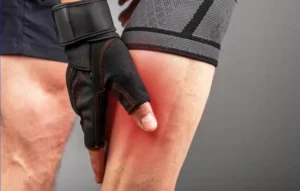
Sore shins?
It may seem like a minor issue until it starts to limit your ability to perform more strenuous activities. Have you ever experienced pain in your shins? Perhaps this discomfort occurred on the front or inner side of your tibia. This complaint is often associated with people who run, jump, or rapidly increase their training load. The diagnosis may be medial tibial stress syndrome, better known as shin splints.

How to recover quickly from training?
During deep sleep, growth hormone is released, protein synthesis increases, and neuromuscular reorganization occurs. It is during this period that the body repairs micro-injuries induced by training and consolidates adaptations.
Poor sleep compromises strength, endurance, coordination, and tolerance to load. No peripheral strategy can compensate for chronic sleep deprivation.
Consistency in bedtime and wake-up times, a dark and quiet environment, and sufficient rest time are crucial to the recovery process.

Heel pain in the morning? It could be plantar fasciitis.
Plantar fasciitis is a discomfort described as a feeling of pins and needles in the heel. The pain occurs immediately upon waking up, then may ease throughout the day, but returns later. This pattern is typical of plantar fasciitis, a condition that is treatable in most cases.
During the night, the plantar fascia (the fibrous structure connecting the heel to the toes) remains shortened, and when standing up, it is suddenly placed under load, causing sharp pain when walking.
Contrary to what many people think, this is not a serious inflammation. In most cases, the problem lies in repeated overload and the tissue’s loss of ability to cope with daily impact.
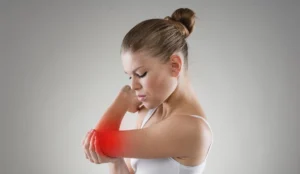
Measures that relieve tennis elbow
“Tennis elbow” is the name given to lateral epicondylalgia, pain on the outside of the elbow, almost always linked to overuse of the tendons that extend the wrist and fingers (very close to the bone, in the lateral epicondyle). It does not only occur in tennis players.
