
Free shipping on orders over €75 to mainland Portugal.

🚚 Fast 24-hour/48-hour deliveries nationwide

Favoritos
Sem categoria

Knee pain when running: What does it mean? And what should you do?

It is that unwelcome visitor that may appear right at the start of the warm-up, or after a few kilometers. Instability and weakness set in around the kneecap and worsen on descents, stairs, or after longer workouts. Should I wait to see if the knee pain goes away on its own? Let’s find out!

In most cases, it is related to overload of the patellofemoral joint.. It is an imbalance where the knee receives more load than it can absorb, often because the hip and foot are not controlling the movement properly. The cause may be rapid increases in volume, sudden changes in pace, or long periods of sitting.

INSTA drartus.com 1, Ortóteses Desportivas DRARTUS

Pain inside the knee

And when the pain is located on the inside of the knee? It is usually suspected that there is a connection with the meniscus. The meniscus is a cartilage structure inside the knee, between the femur and tibia. There are two in each knee: one internal and one external.

It acts as a shock absorber., which distributes the load, aids stability, and prevents the bones from colliding directly when you perform movements involving the knee. Without it, knee wear accelerates significantly.

The meniscus does not have a good capacity for regeneration., especially with age. Therefore, when you suffer a injury, the body cannot always “solve it on its own.” Some Tears cause localized pain, a feeling of blockage, cracking, or swelling after exertion.

But is this pain always related to the meniscus? No, in runners, for example, this pain is often associated with excessive stress on the internal ligaments or running patterns that cause the knee to “close” inward with each stride. If there is sudden swelling, joint locking, or a clicking sensation with loss of function, immediate clinical evaluation should be sought.

Lateral knee pain

Lateral knee pain, especially after a few kilometers, can be caused by iliotibial band syndrome.. The discomfort appears as a twinge or burning sensation on the outside of the knee, increases with running time, and improves when you stop. It may not hurt at first.

Here, the problem is usually above the knee.. Lack of hip control, weak glutes, excessive stiffness, or recent changes in load. Massaging the area will not solve the problem.

Pain behind the knee

Posterior pain may be associated with overload of the posterior thigh muscles., irritação de estruturas profundas ou, em alguns casos, a alterações do tendão poplíteo. Costuma aparecer em quem corre em descidas frequentes, terrenos irregulares ou com passada muito longa. Também surge em fases de aumento súbito de intensidade.

The role of the knee brace

Knee braces can be very helpful in certain specific contexts. They increase stability and can reduce discomfort. However, they cannot be used as a permanent support, as the knee cannot get used to only being able to run with the brace on.

What should you do when the pain appears?

You should temporarily reduce the load, adjust the volume or intensity, and observe the response. It is not usually necessary to stop everything, but rather to give the body room to recover. Footwear, terrain, and recent changes in training should be evaluated.

But what if the pain persists, worsens, or changes the way you run? It should be specialized assessment sought as soon as possible. Being informed is the best way to prevent small situations from having major consequences. Your safety is our priority.

-Drartus Team

Related frequently asked questions:

Will changing sneakers solve the problem?

It can help, but it rarely solves the problem on its own. Footwear changes the way the load reaches the knee, but it does not correct deficits in strength, control, or excess volume.

Is running on a treadmill better or worse for people with knee pain?

It depends on your running style. For some, it reduces impact and allows for control; for others, it alters mechanics too much and keeps the problem active.

Does warming up make a real difference, or is it just a habit?

It makes a difference. A “cold” body responds less effectively to stress and loses its ability to absorb impact in the first few minutes, which can cause pain to set in earlier.

Does stretching after running help with knee pain?

It helps with the feeling of stiffness, but does not solve the root cause of the problem. If the cause is poor control or excessive load, the effect is limited.

Is strength training really necessary for those who just want to run?

It is one of the most effective tools for reducing pain recurrence. Not for running faster, but for running with less joint wear and tear.

When pain “moves,” is that a good sign?

Not always. It can mean adaptation, but also compensation. The important thing is not only where it hurts, but how the movement is being performed.

How long is it reasonable to wait before seeking help?

If the pain persists for several weeks, always reappears in the same contexts, or begins to affect your running, you should seek immediate medical attention.

dor joelho ciclismo Face, Ortóteses Desportivas DRARTUS

Knee pain and adjustments in cycling

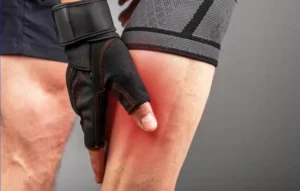
Many people with knee pain tolerate cycling better than running, as it is supposedly a lower-impact activity. With the load well distributed and practiced correctly, this sport can help strengthen the thigh and improve the knee’s tolerance to exertion. But then, why is it that in some cases this discomfort is still related to this practice? These and other questions will be answered in this article.
Read More »
facebook drartus.com 1, Ortóteses Desportivas DRARTUS

Sore shins?

It may seem like a minor issue until it starts to limit your ability to perform more strenuous activities. Have you ever experienced pain in your shins? Perhaps this discomfort occurred on the front or inner side of your tibia. This complaint is often associated with people who run, jump, or rapidly increase their training load. The diagnosis may be medial tibial stress syndrome, better known as shin splints.

Read More »
INSTA drartus.com, Ortóteses Desportivas DRARTUS

How to recover quickly from training?

During deep sleep, growth hormone is released, protein synthesis increases, and neuromuscular reorganization occurs. It is during this period that the body repairs micro-injuries induced by training and consolidates adaptations.

Poor sleep compromises strength, endurance, coordination, and tolerance to load. No peripheral strategy can compensate for chronic sleep deprivation.

Consistency in bedtime and wake-up times, a dark and quiet environment, and sufficient rest time are crucial to the recovery process.

Read More »
INSTA drartus.com 2, Ortóteses Desportivas DRARTUS

Heel pain in the morning? It could be plantar fasciitis.

Plantar fasciitis is a discomfort described as a feeling of pins and needles in the heel. The pain occurs immediately upon waking up, then may ease throughout the day, but returns later. This pattern is typical of plantar fasciitis, a condition that is treatable in most cases.

During the night, the plantar fascia (the fibrous structure connecting the heel to the toes) remains shortened, and when standing up, it is suddenly placed under load, causing sharp pain when walking.

Contrary to what many people think, this is not a serious inflammation. In most cases, the problem lies in repeated overload and the tissue’s loss of ability to cope with daily impact.
Read More »
drartus.com LinkedIn, Ortóteses Desportivas DRARTUS

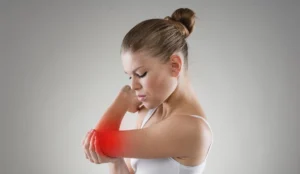
Measures that relieve tennis elbow

“Tennis elbow” is the name given to lateral epicondylalgia, pain on the outside of the elbow, almost always linked to overuse of the tendons that extend the wrist and fingers (very close to the bone, in the lateral epicondyle). It does not only occur in tennis players.

Read More »

Join the conversation

TOP
Os mais vendidos:
Carrinho 0
RECENTLY VIEWED 0

Select a Pickup Point